‘Rosemead’: Interview With Marilyn Fu
EntertainmentArchive
 Feature Archive
The indie film Rosemead is getting some attention on the festival circuit. It’s based on the tragic true story of a terminally ill mother and her son as they struggle with his schizophrenia. I was invited to sit down with screenwriter Marilyn Fu, who wrote the Eric Lin-directed screenplay based on an 2017 LA Times column by Frank Shyong, about the process of writing this tragedy, and what messages she hopes viewers will get from the finished project.
FOURTH TAKE: Hi Marilyn, it’s very nice to meet you. I got a chance to check out the film, and it’s spectacular. It really touched me personally, because I’m somebody who has struggled with mental health for my whole life. Thankfully, I am stable, and it’s not schizophrenia, but it has been challenging at times. I also happen to be a parent. So, seeing both sides of that hit me hard in moments and I really appreciated that so much. It felt so real and personal to me. And I wondered, does this feel maybe more personal than some of the other things you’ve done?
Marilyn Fu: First, I want to just say that hearing you speak about the film from such a deep place is really touching, and it is exactly why any of us would spend all these years trying to make this film, and fight for it to be on screen, just for just that moment. So, thank you. Thanks a lot.
FOURTH TAKE: You’re very welcome. Thank you for writing so honestly about the subject.
Marilyn Fu: So, my point of entry into this story really was as a new mother, because I was pregnant with twin boys when I started writing the script. So I didn’t know anything about motherhood other than the things that I was told, and now I was gonna have double. That made me extremely scared. I didn’t know what was gonna happen, and so getting to deep dive into this story, about a mother’s love for her son and a son’s love for his mother, I think both those things are so present and so strong in the film. That taught me more about motherhood than I could ever have expected.
So that was six years ago when I started the script, and now, as we’re on the cusp of being able to share it theatrically with so many more people, in December. As we’re going to festivals and getting to speak with people who have been affected by some of these exact themes and issues. It’s just grown to have so much more impact, even for me personally.
So when you ask if it’s a personal project, in so many ways, there’s all these layers to it. Motherhood, another layer of beginning this project and wanting so much to see Asian representation on screen in a way that felt really complicated, really nuanced, in a story that would make us really stretch to understand this woman.
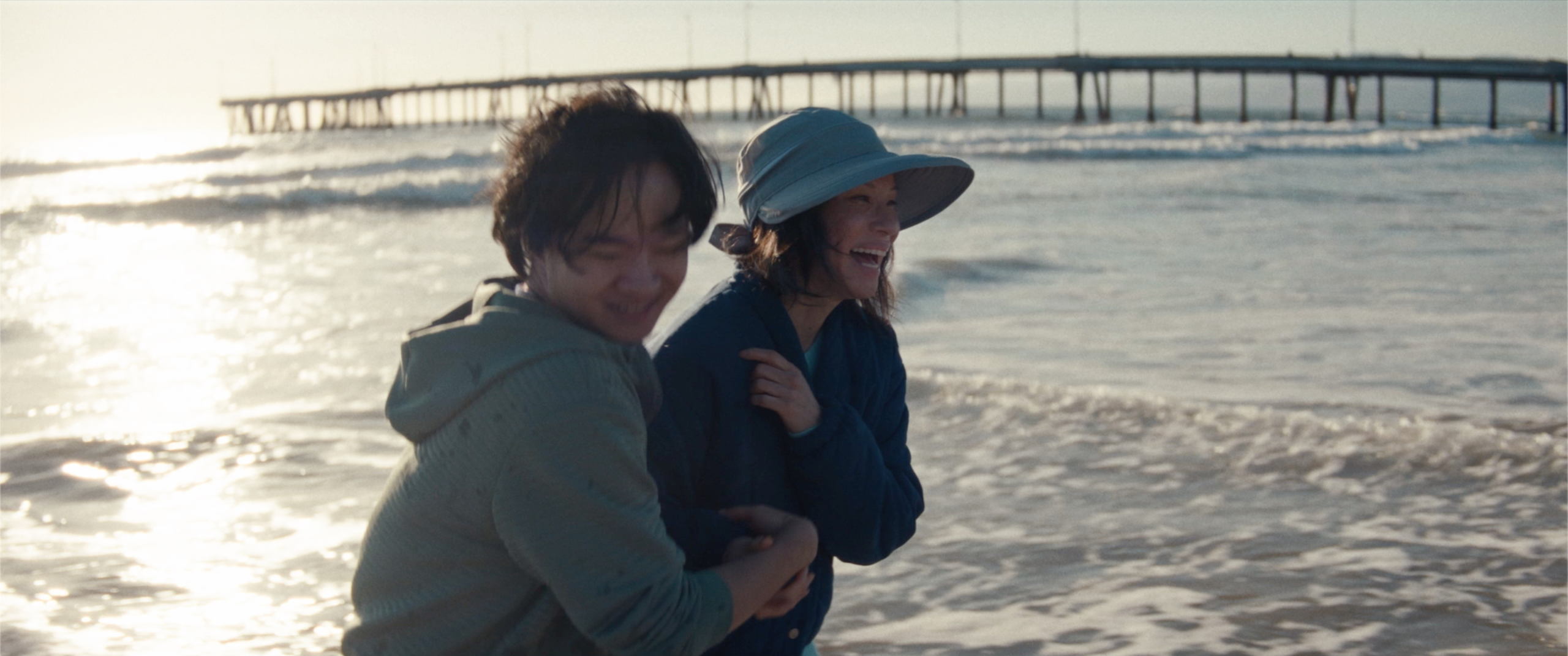
FOURTH TAKE: Yeah, and that was something interesting that I noticed almost immediately, was the complexity of, not just the culture itself, but the way it’s presented in the film. Because Lucy Liu’s character, Irene, almost immediately we see that she is already seeking help for her son. She already is recognizing that there is a need for help, and she is in the process of getting her son that help through therapy, through medication, even though it’s very clear that it makes her uncomfortable. That felt really brave to me, as somebody who watched my own parents go through that struggle of understanding what was happening with me.
Later in the film, it is kind of addressed that the larger community doesn’t feel that way. She understands that her community is not going to understand these steps that she’s willing to take. Was that important for you to get out, right off the bat, to start in that moment of her already reaching out to her son in this way. Through getting him the help that he needs.
Marilyn Fu: It was important to me, and also part of the real story. So, we knew that Irene, in reality, had been taking her son to seek help, that they were going to this family clinic, that that was in process. And so it was one of the ways that she was trying to help him. What we try to do in the film is show that there were these resources available to her and yet, in the end, it wasn’t enough. Leaving people with a question at the end of the film. How can we further support? How can we be there for someone like Irene, for someone like Joe, so that this doesn’t have to happen again?
I also love hearing you speak about your personal experience, because what has been eye-opening for me in showing the film to more and more people is that the impact of it crosses cultural boundaries. It is universal, and there is something that people can really latch onto that is not just within the AAPI community, and I love that.
FOURTH TAKE: The way the community in the film is represented is really beautiful. It has its quirks, like I said they’re not always open to certain things, but the way that their lives are intertwined. They’re all willing to help each other. It was a really beautiful look at a community that I’m not intimately familiar with, and I really appreciated getting to see that.
Speaking about the community at large, I was curious, because there’s a clear generation gap in how they talk about mental health. There’s a really nice scene, in the middle of the film, where he (Joe) almost has a coming out moment to his friends, about some of what he’s going through.
Marilyn Fu: I love that you bring that up.
FOURTH TAKE: Well, it struck me, because it was just after a moment that we saw where Irene had a bit of a confrontation over the same kind of subject. And there was a very nice contrast. So, what was it like, exploring that? Was part of your own personal experience? What was it like bringing that to the page?
Marilyn Fu: Well, I do remember, when I was in middle school, a cousin of mine who’d emigrated over here from Taiwan for school and was working in finance in New York had a breakdown.
She just could not go on. Her parents are in Taiwan but my parents were here, her aunt and uncle, and so they went to New York and picked her up and brought her back to our home in Philadelphia, just to rest, right? It was just about, “oh, I think she needs to get some more rest.” What I saw, though, was my cousin just completely wrecked, and crying and unable to express herself.
After this incident, the messaging from our family, from her parents, was that we’re not gonna talk about this. We’re gonna move through this. It’s sort of like it didn’t happen, and she’s fine now.
So, from that moment on, I really got a sense of, “okay, so these are the things we talk about, these are the things we don’t.” And that formed my perspective on how that generation looks at mental health.
Then, as you mentioned, there are these two scenes, back-to-back, pretty much. One where Irene does not feel the support from her community, from her generation, and then another one where Joe is with his peers, and he does. I really think that that parallel is so beautiful. It is something that I did work on with the director, Eric Lin, just calibrating these moments.
Ultimately, we want the audience to feel that there is no clear answer. We knew that Joe, in real life, had been bullied. We knew things like that. And yet we also wanted to show that there are a variety of reasons that are very complicated for why this happened. It’s not going to be just because he was bullied. It’s not only because his father passed away. It’s just all of these things compounding upon him.

I think the year was a big year for Joe in real life. There were a record amount of school shootings, and we knew he was obsessed with Dylann Roof.
Think about that, compounded with his father’s death, compounded with everything he’s going through socially at school. He was voted most shy at school, but he turned down the chance to be in the yearbook because he didn’t want to be photographed. So it tells you about him and who he was. So, Eric and I really didn’t want you to get to the end of the film and feel like you knew exactly the reason this happened.
FOURTH TAKE: That came through. Or, it came through for me at least, that there are so many different pieces coming together that people just don’t have any real control over. And that was something, as a parent, that was heartbreaking and terrifying for me. Watching Irene’s character do everything that she could, and just having pieces slip through the cracks, and stuff that is completely out of her control, take the wheel at certain points and just turn it randomly.
The film showcases some schizophrenic episodes in what I thought was a very interesting way. Not a way that I think I’d really seen before. I was wondering, when you were writing it, how did that wind up looking on the page? And how do you feel like it translated to the screen?
Marilyn Fu: That’s a great question. I think that this was probably one of the most challenging parts of writing the script. So, my first initial draft was pretty broad. I read this book called The Quiet Room. I watched this show, a BBC show, called Don’t Call Me Crazy. I’ve read a couple different articles, and the research is broad. At that point, I was still just trying to get a sense of how this can best serve a story about a mother and son, and their love. I remember the first efforts in the script were much more outward. What you see is that there’s a lot going on inside of Joe, and we’re not going to experience all of it, or really much of it. We will see him from the outside, but we know a lot’s going on inside.
In the first drafts of the script we were seeing more of what we think he is seeing.
We heard more of the voices that were communicating with him. Then we went deeper, and beyond my research, we worked with mental health experts. We had Frank Shung, the journalist who has been covering this topic in the AAPI community for many years. He gave us suggestions and read all the drafts.
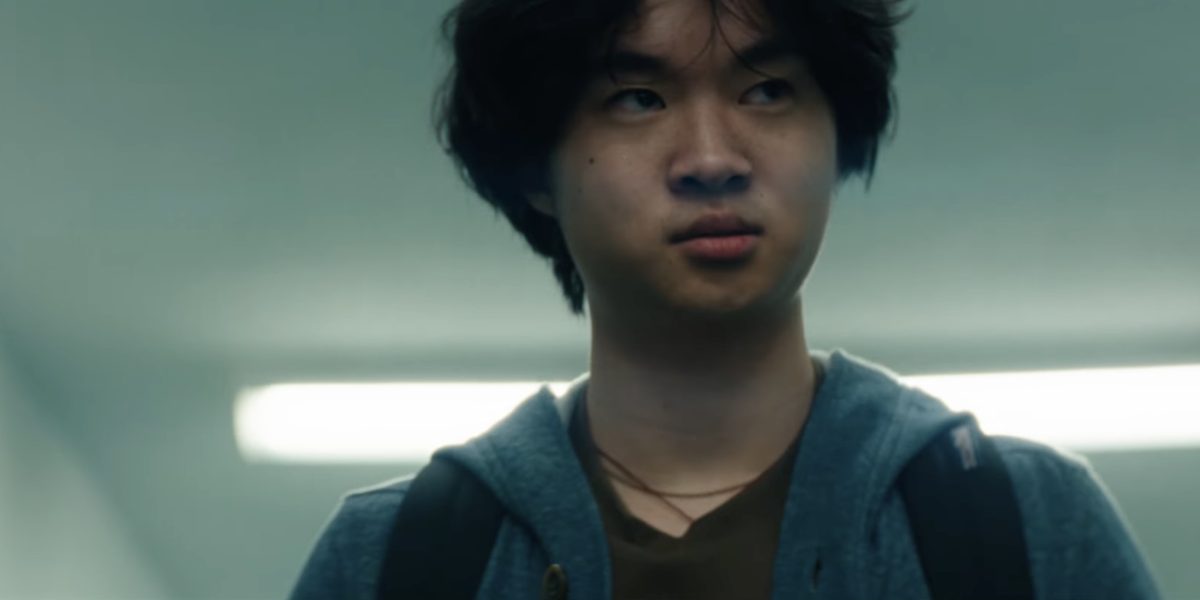
Eric Lin, the director, came on about a year after the first script draft was done, and he had input too. We worked together to figure out how we were gonna craft Joe’s character and portray him in the right way. A lot of things started getting stripped down, especially when the actor, Lawrence came on to play Joe. Now we had this incredible actor. What are you gonna let the actor do? We let him embody his condition, rather than having so much outward effort in the film, to kind of show us his experience.
FOURTH TAKE: That’s beautiful. Something I noticed was at the beginning, you don’t know what you’re seeing. Because from an outside perspective, from somebody who’s never experienced it, I imagine you can’t know what a schizophrenic episode feels like. So, in the film, we can’t really translate what we’re seeing, but it just feels like a sensory overload.
As the film goes on there’s less and less visual depiction of it. The film relies more and more on the performance. I thought that was an interesting choice, because then the episodes are less of a distraction from the story.
I just got a 5-minute warning, and I wanted to lighten it up a little bit. I’m curious. What did it feel like when you discovered that Lucy Lu was going to be starring in this film? Was there a moment when you found that out, and you were like, “Oh, wow?” How do you feel about her performance?
Marilyn Fu: So, Lucy Liu is someone who has been in my life for so long. As a young Asian woman trying to break into this industry, there are not really very many people to look up to. I remember in film school I worked at a video store, way back when there were still video stores, and I remember people would come in to rent these movies. they would say “Oh my gosh, you look so much like Lucy Liu.”
Now that I’ve been doing all these Q&As with her, and we’re side-by-side all the time, I can see that we don’t look at all like each other. And I realized that it was because there wasn’t anyone else
to point to. What they were trying to tell me was, you’re pretty, you’re smart, you’re talented, and the only person they could point to was Lucy. It’s a testament to how amazing she is, but also that she was our representation.
It was huge to know that she was gonna embody this role. Once she came on to do that, there was nobody else. It was always gonna be her.
We had a great moment the other week at the Philadelphia Film Fest. We were there to present the movie together, and Lucy won an award. We were doing the Q&A afterwards and someone asked me a question about writing, and I said, “well, as a writer, you’re just always hoping that the team, the actors, the director, they will just take your words and elevate everything, and just take it to a new place.” Lucy did that.
I feel that she, in every way, elevated my first ideas about this film and about her character. And it was a really touching moment to share that with her.
FOURTH TAKE: That’s beautiful. And honestly, after seeing her performance, she just melts into the character. I can’t imagine anybody else starring in this film and portraying that character. It was very powerful.
I just got a wrap notice, so I’m gonna let you go. But it was great talking to you. Congratulations on the film. I feel like it’s a really important film for people to see, so I’m gonna be hyping it up all over the place.
Marilyn Fu: Thank you. Yes, we will release December 5th in New York, December 12th in LA. These are huge weekends for us, for our grassroots campaign, to just get people to see this film. So thank you for having me on, and such a great, deep conversation.
ROSEMEAD WILL RELEASE IN LIMITED THEATERS IN NEW YORK AND LA ON DECEMBER 5 AND 12 RESPECTIVELY. CHECK OUT THE TRAILER BELOW.


